
From chasing findings to eliminating them at the root
We’re built different
Intent-based reasoning
Access decisions are evaluated against real business context, operational needs, and intended usage patterns.
Full access path coverage
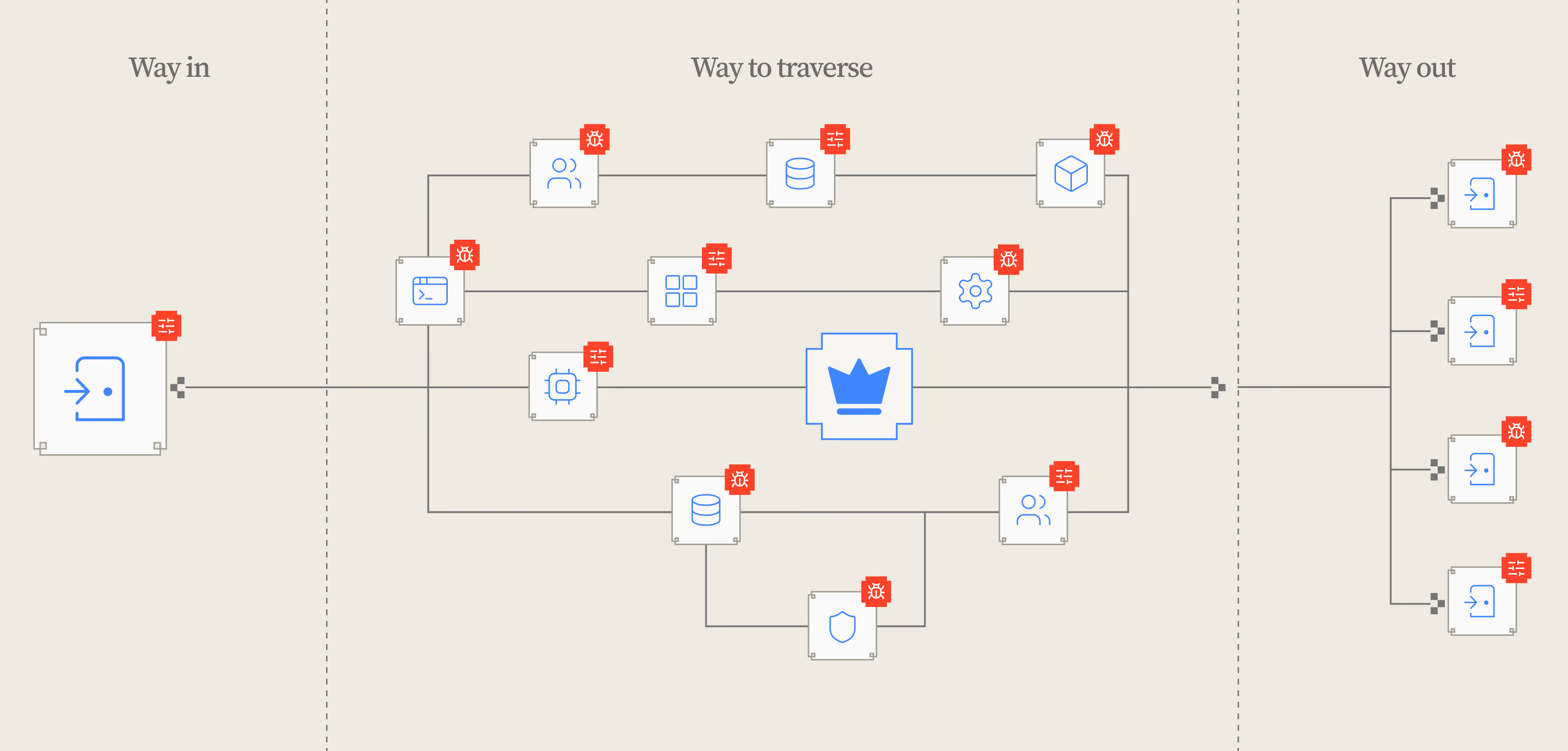
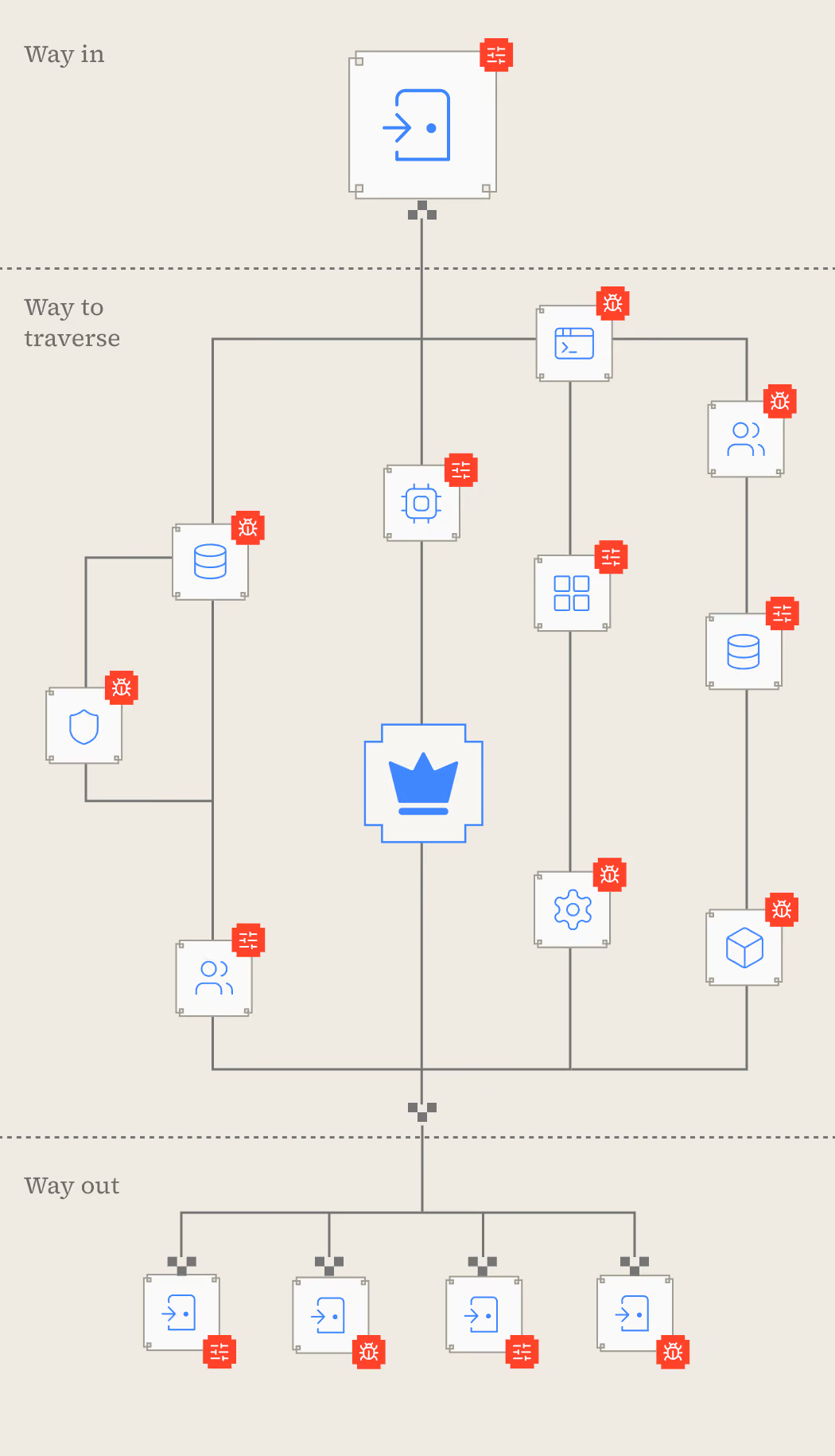
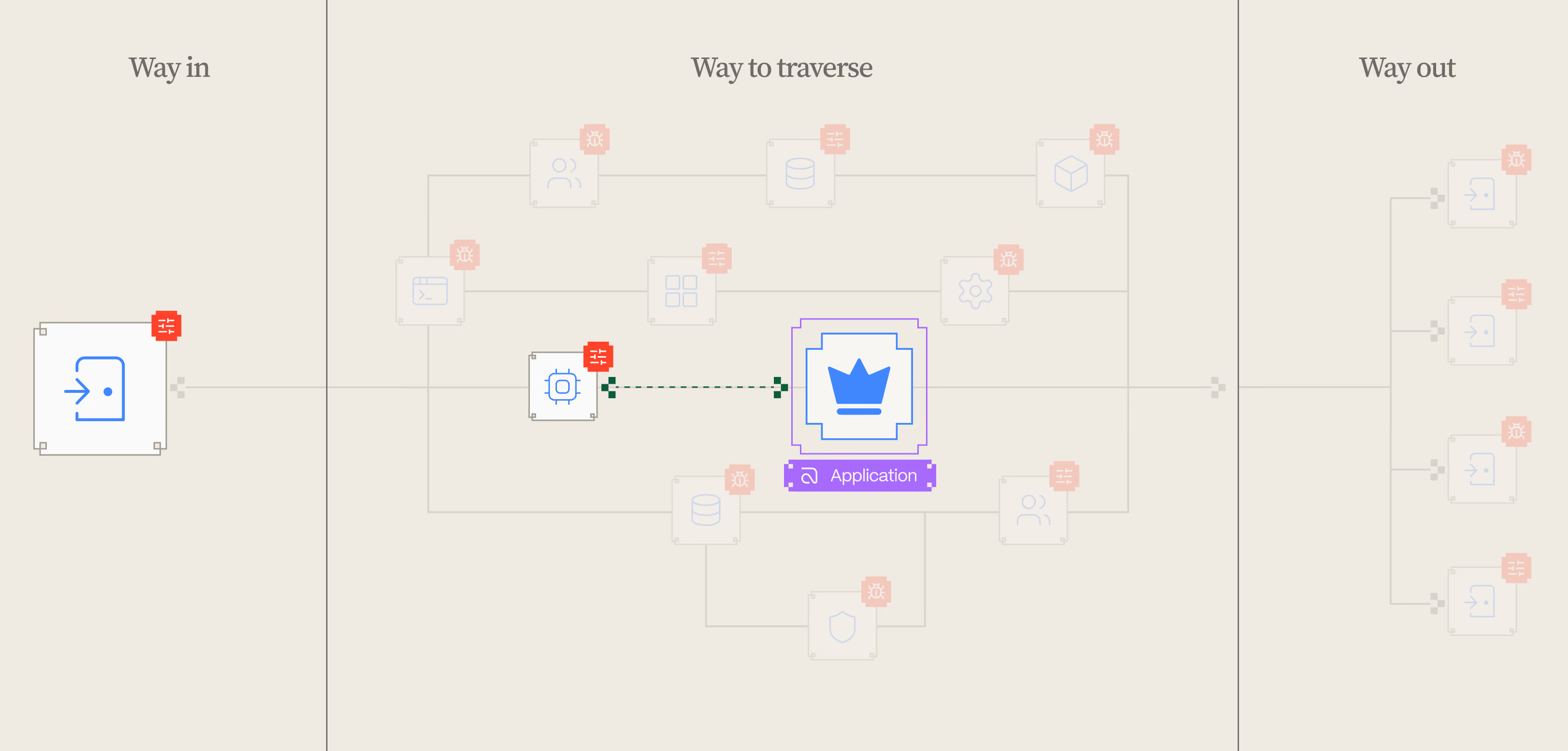
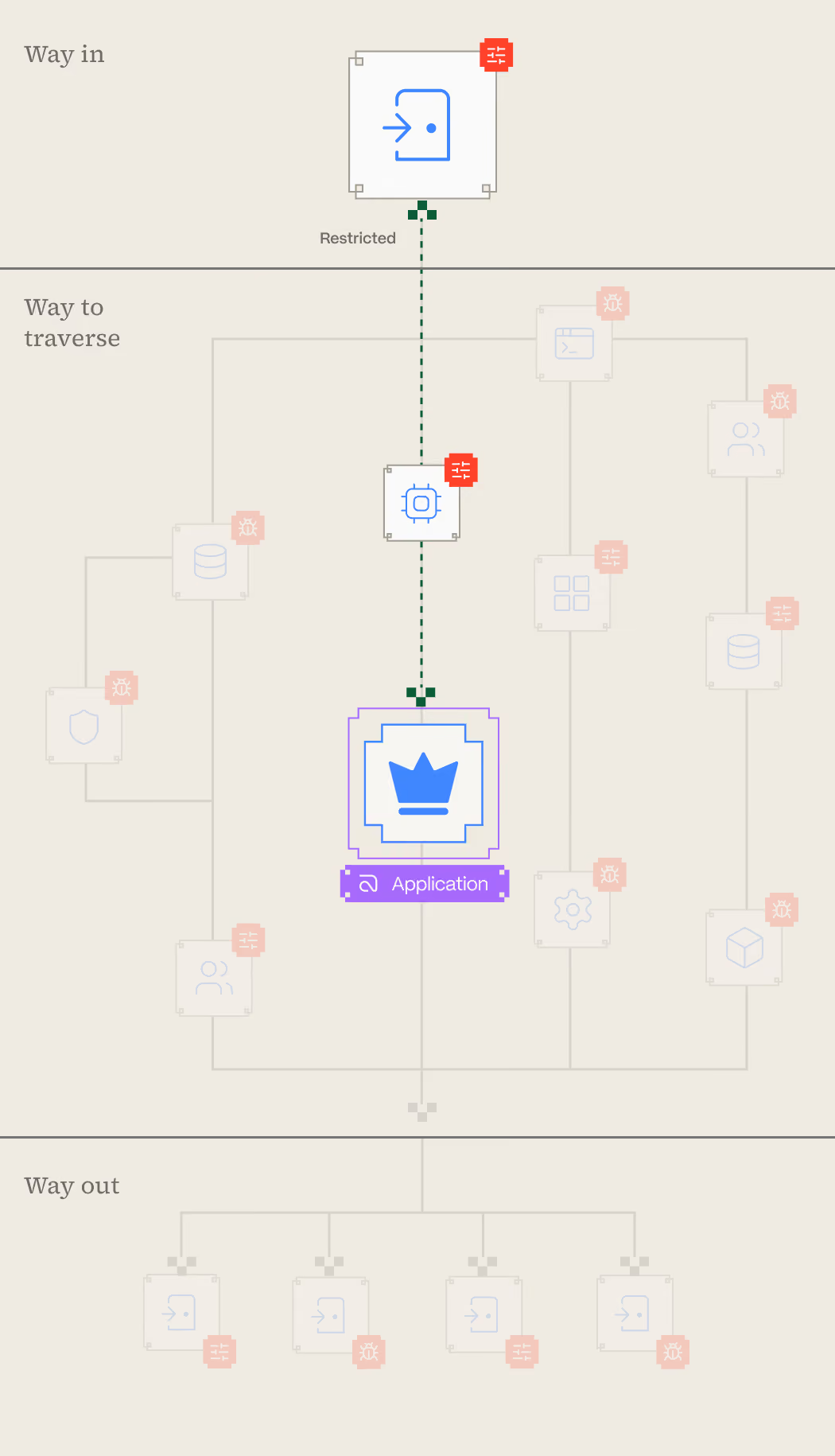
By analyzing configured, observed, and intended access, Act exposes every hidden path, revealing everything that can happen, not just what already has.
Converged control
Identity, network, and AI access are analyzed and enforced as a single model, closing gaps that siloed tools cannot structurally reach.
Cloud-Native enforcement
Act enforces boundaries through your cloud's own native controls, using Infrastructure-as-Code. No agents and no new infrastructure to maintain.
Six boundaries, one security model
Act places six contextual boundaries across your cloud, continuously reducing attack paths as your environment evolves.
Close off unintended inbound access from outside your environment and eliminate the paths attackers use to exfiltrate data.

Rightsize human access and remove standing privileged access, so nobody carries more rights than their role actually needs.
Lock down access to production and management environments while keeping sandbox environments fully isolated from everything else.
Ring-fence each application, secure its data and compute, and block attackers from moving laterally between them.
Contain endpoint AI agents, govern the infrastructure they run on, and ring-fence cloud AI agents so they can't reach beyond their intended scope.
Isolate tenants to protect customer data, enforce geo-fencing for regulations like GDPR, and restrict access to regulated data to meet standards like NIST 800-53, PCI-DSS and HIPAA.
Hear from those who Acted
“Since I brought Act in, I can have real peace of mind from the remediation game. That’s the biggest change. I know my architecture is safe with Act.”

"To manage security at scale, you need a system that understands your context, maps relationships, and stops risk in its tracks. That's exactly what Act does: eliminating risk at the foundation so it never reaches you at runtime.”

“With Act, we're able to add various controls that permanently eliminate attack paths and create a resilient form of security by constraining attacker optionality.”

"Act is a great product because it breaks the cycle of recessive problems in the most fundamental areas and creates actual prevention and secure practices that enforce least privilege in the cloud.”

“Traditional tools are great at finding risk and telling me about it. Now, the risk landscape is changing and forcing us to go back to the fundamentals and eliminate the root cause of the problem: the over-granting of access.”

“An AI agent with excessive permissions isn't a hypothetical risk, it's a live one the moment you deploy it. Act scopes what agents can do down to what they should do.”

“CISOs have chased least privilege in the cloud for years, and it’s always been a mess nobody knew how to untangle. Act is the first solution that looks like it’s cracked the code.”

“You can’t secure the agent from inside the agent. You have to secure it at the infrastructure and access layer, which is exactly where Act operates.”

“Act’s proactive approach immediately caught my attention. As I went deeper into the technology, I saw a fresh approach that delivers real value to me as an enterprise CISO.”

"Organizations have always wanted least privilege. The challenge has never been intent, it's been knowing which permissions are actually needed and what can safely be removed. Act helps turn that uncertainty into actionable decisions.”

“If you want to be able to sleep at night and you want something that's simple to operate, talk to Act.”

How Act secures your cloud

Map your cloud boundaries
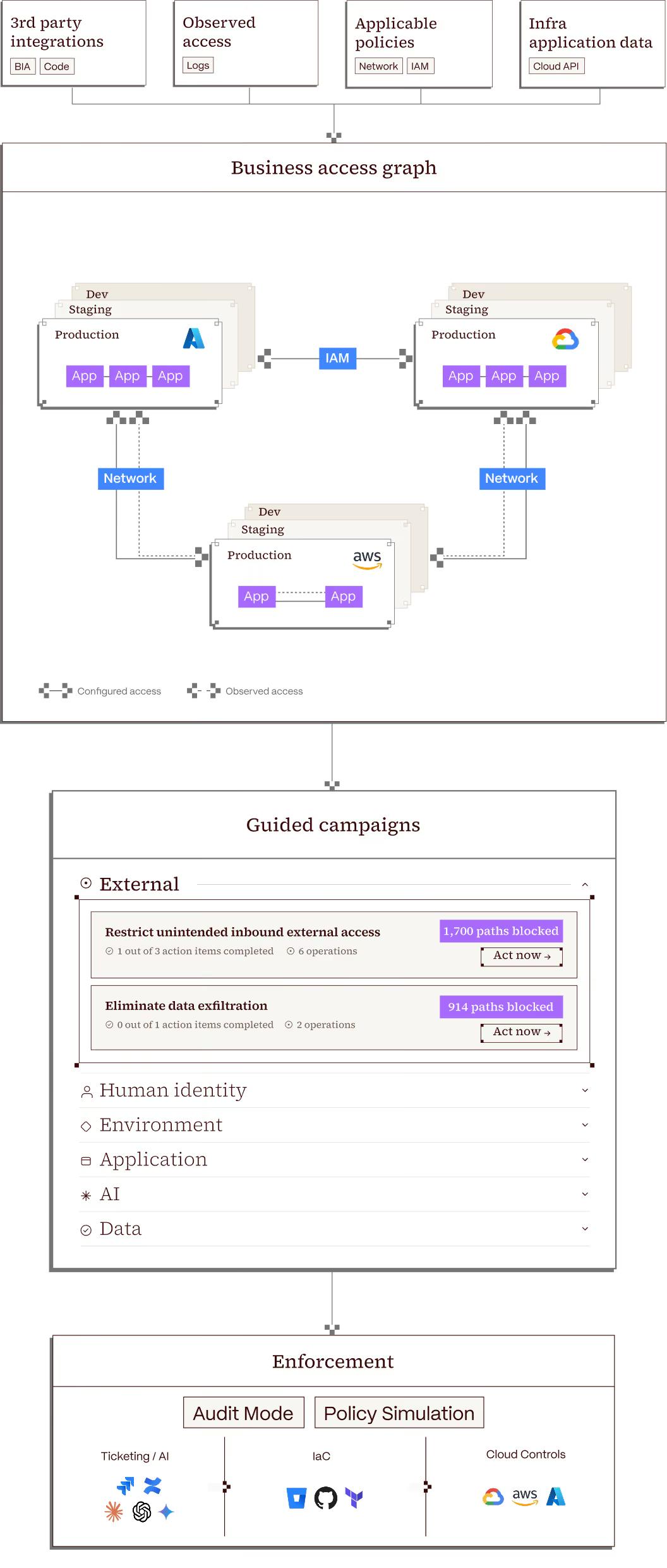
Act systematically maps everything running in your cloud, whether you know about it or not, the way your business actually thinks and operates: real applications, environments, and data, creating the foundation for precise, business-aware enforcement.
Model your reachability
Act brings identity, network, and AI access controls together into one unified access map, then analyzes it across three dimensions:
Intended access: What that access was originally intended to enable.
Observed access: What is actually being used to keep the business running.
Configured access: Everything current configuration allows to be reached and acted on.
The gap between what is permitted and what is actually required is where risk accumulates.
Run Hardening Campaigns
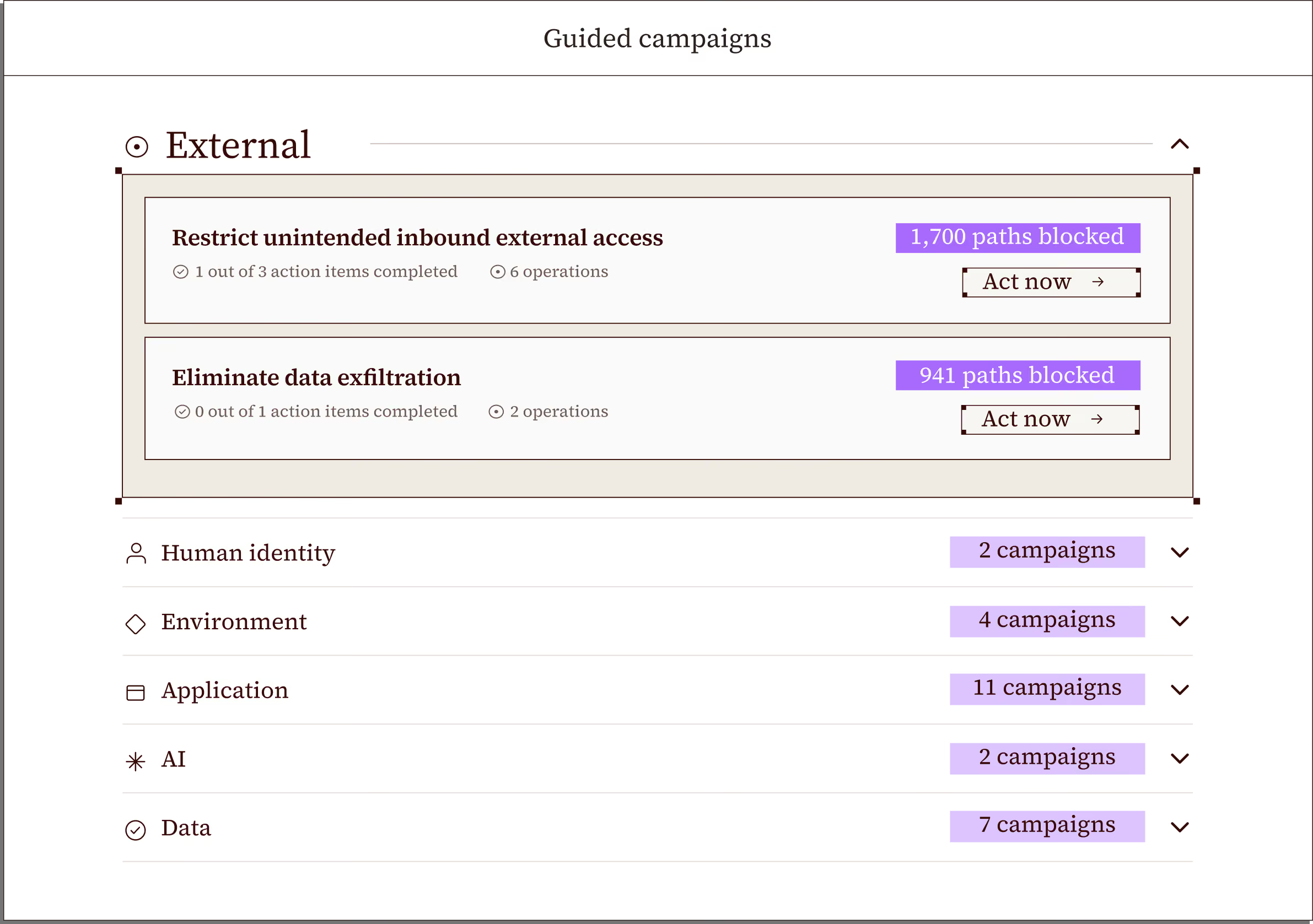
Act curates the precise policy changes needed to close unused access paths across your environment and enforce the principle of least privilege. Through guided, structured campaigns, you can eliminate thousands of attack paths with a single policy update.
Two campaign types cover your entire attack surface:
Guardrails: Broad explicit-deny policies that block entire attack categories, including unauthorized cross-environment movement, data exfiltration, and external overexposure, while preserving legitimate access through built-in exceptions.
Ring-fencing: Least privilege, explicitly-allow policies, applied selectively to crown jewel applications and sensitive data. Eliminates overprivileged access to critical workloads, limits lateral movement, and contains blast radius.
Enforce the change, safely
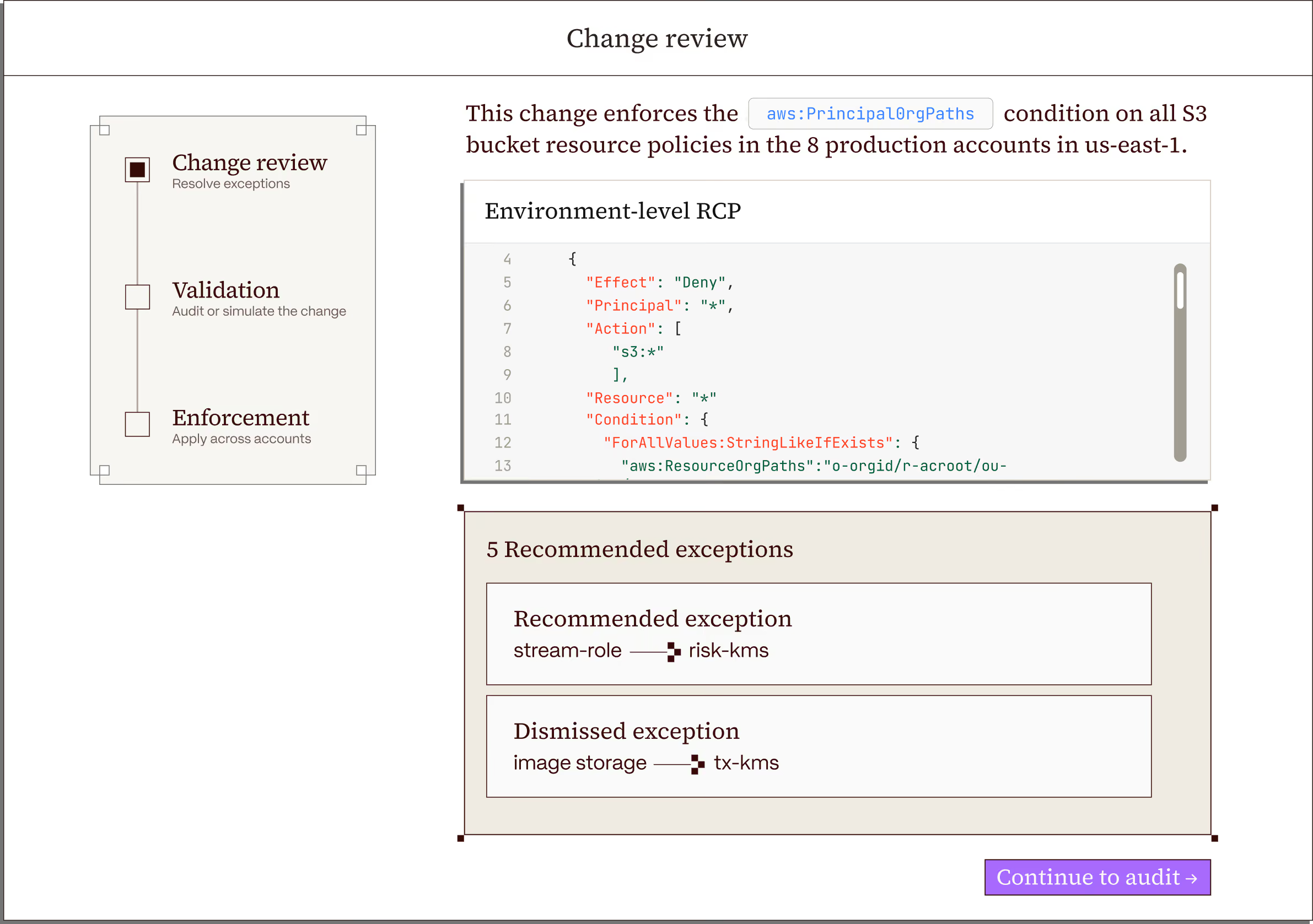
Before enforcement, each recommended change is simulated against historical access data, to show what it would have blocked, so teams can validate its impact and avoid disrupting production.
Simulation and validation: tested against observed access, with contextual exception handling built-in.
Human in-the-loop: humans lead every decision, assisted by agentic workflows.
Native enforcement: ships as pull requests to your existing Infrastructure-as-Code (Terraform, CloudFormation), through the cloud-native controls you already own.
Continuous coverage: enforced continuously as your environment drifts, from CI/CD pipelines to active runtime, without disrupting operations.
How Act Works